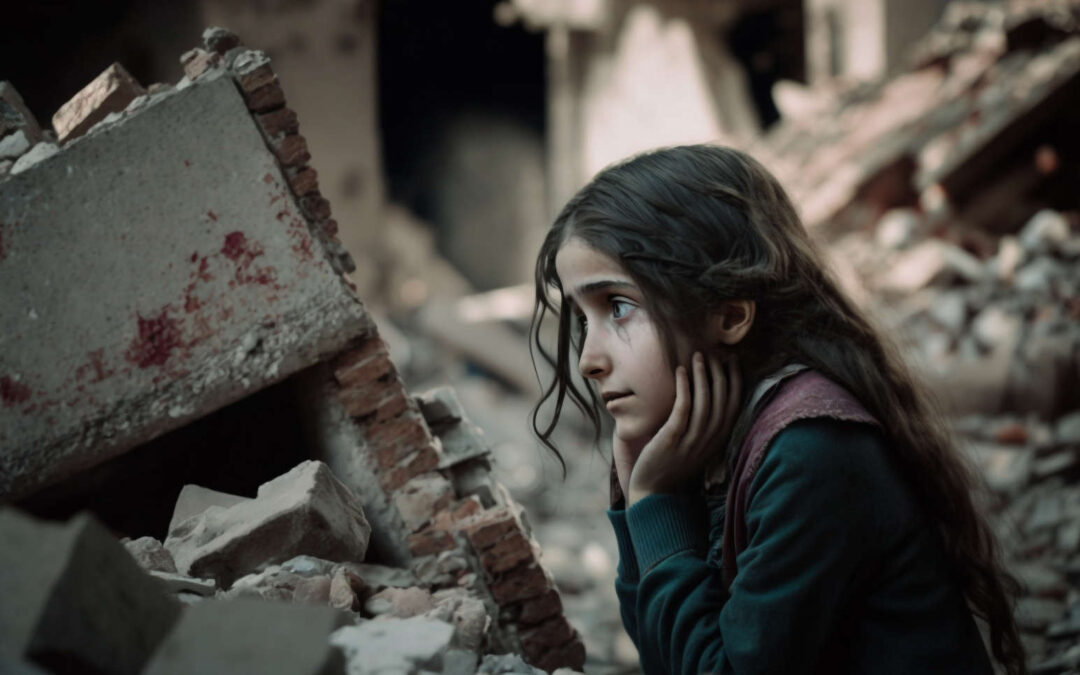
A Perspective on the Russian-Ukraine Conflict
“Be kind, for everyone you meet is fighting a hard battle.” – Socrates
The Healthy ‘I’ knows this. Trauma Survival ‘I’ forgets it.
The Definition of a Perpetrator
A perpetrator is someone who harms or causes harm to another, directly or indirectly, consciously or unconsciously, flagrantly or secretly. Perpetration is the primary survival strategy of traumatization. By hurting another, I avoid feeling my own vulnerability and helplessness, my own trauma.
When I harm someone else, I must confront my own shame and guilt, which in turn hurts me. Burying my shame and guilt further injures me and prepares me to continue hurting others, perpetuating an inevitable cycle of increased perpetration.
When I inflict harm, the victim may, as part of their trauma survival, go on to hurt others. Thus, in harming another, I become complicit in any subsequent harm they may cause. Each harmed individual faces a choice: do they focus on their own hurt and trauma, or do they avoid their pain by harming someone else?
If we hurt another without recompense or acknowledgment, we may be sending another perpetrator into the world. What President Putin does now is harm many people, escalating hatred in the Ukrainian people and their desire to retaliate, thus perpetuating the cycle of perpetration.
To hate is to hurt. A child does not come into the world with hatred, only with love and the desire to love and be loved. Love arises from the chemical reactions associated with giving life. Under healthy circumstances, a child and mother are hormonally primed to love each other, essential for life to flourish.
Hatred comes from the outside. A child learns to hate from a hating parent. Hatred from the outside becomes the connection instead of love, resulting in self-hatred. The unwanted and hated child can only survive by accepting the mother’s terms: “I hate you, so to gain connection with me, you must hate yourself.”
The hated and self-hating child judges and criticizes themselves, continually hurting themselves psychologically, emotionally, and often physically. This child grows into an adult who must hurt others to deal with and avoid their internal self-hatred. The power of hurting another may provide temporary relief, but power is an addictive drug. The lack of power connects us with our trauma, prompting us to find someone to hurt again to avoid our vulnerability and helplessness.
Hatred is against life. Do other creatures hate? Perhaps to gain territory or safety, but no creature hates itself. No animal, plant, tree, or insect harbors self-hatred. Even predators do not hate their prey, nor do prey hate predators. They understand each other and the necessities of life. Aggression may be used to gain food, protect themselves, or fulfill other needs, but hatred is different. Hatred simmers and grows with each experience of perpetration against us and with each act of perpetration we commit against another.
The Restorative Self-Integration Method and Trauma Resolution
To live in peace, we must recognize our self-hatred and our ability to hate others. This requires feeling and understanding our vulnerability and helplessness and recognizing these traits in others. Hating someone like Putin does not help; when hate enters us and fuels our actions, we fail.
Addressing Our Trauma
The only sensible action is to acknowledge and take our deep trauma seriously. Ignoring our trauma distorts our perception of the world and invites us to join the fray and the hatred.
Externalizing solutions onto governments and those in power leads us back into a world of hatred. By working to clear our psyche of the distortions and survival tactics developed since birth, we strengthen our Healthy ‘I.’ Only from a Healthy ‘I’ can we make any move that will not result in further destruction.
Strengthening the Healthy ‘I’
The Healthy ‘I’ struggles, and the Survival ‘I’ dominates, and our traumas remain, secluded, split off, alone, and forgotten to where our Healthy ‘I’ is strengthened, with fewer unresolved traumas, and less need for trauma survival strategies. The Healthy ‘I’ knows our trauma and our trauma survival strategies. The Healthy ‘I’ recognizes when unresolved traumas are triggered and, instead of collapsing into survival strategies of hatred and harm, can find more useful solutions, set further intentions, and resolve to take ourselves and our trauma seriously.
With a strengthened Healthy ‘I,’ we can stay calm in adversity, see reality without the distortions of the Survival ‘I,’ solve problems with clarity, intention, and purpose, and recognize problems we cannot resolve while finding ways to move forward. Only from our Healthy ‘I’ can we make good decisions that do not complicate situations further. We are only ourselves. We cannot solve the world’s problems or do anything useful if we do not see reality clearly or fall into survival emotions of hate, passion, blame, and accusation. The Healthy ‘I,’ above all, is realistic. Yes, we live in a world rife with perpetration, but we cannot change this by force or further perpetration. We can only change ourselves and perhaps influence others by our being.
The Words of Socrates
Socrates said: “Be kind, for everyone you meet is fighting a hard battle.”
Even Putin battles his internal demons, helplessness, and vulnerability. He projects his self-hatred onto the Ukrainians, but we are all complicit. We have ignored his trauma, given him the benefit of the doubt, and refused to see the reality of his potential for trauma perpetration. We have ignored reality staring us in the face. In the UK, Putin poisoned an adversary in Salisbury with a Russian-developed poison, killing an innocent bystander, yet we continued to trade with Russia, hoping things would turn out alright. Putin has perpetuated ongoing perpetration, and only now, with the Ukraine invasion and the inevitable threat to the rest of us, do our governments take steps to separate from him and his Russia.
Putin causes immense pain and suffering as his survival strategy of perpetration. It doesn’t help to join him, and it hasn’t helped to ignore his threat of further perpetration. He will not stop because he feels like a victim, and perpetration is his avoidance strategy. Each act of perpetration he commits, and seeing other governments still work with him, strengthens his belief that perpetration works.
If I were a Ukrainian living in Ukraine, this would be the hardest situation I could face. Yes, I might kill or harm for survival, but ultimately, that is the perpetrator’s way if I do not feel the ultimate pain of my actions, my own shame and guilt, my own tragedy. I cannot say what I would do in such a situation as the Ukrainians face now. Thankfully, I am not, and since I am not, the most useful thing I can do is see the situation clearly, think for myself from my Healthy ‘I’ what is best for me to do, realistically and within my ability. Everyone I encounter deals with this dilemma, and perhaps the most I can do is be kind and remember that everyone I meet is fighting a hard battle.
In conclusion, the Restorative Self-Integration Method offers a powerful and effective means of promoting peace through trauma resolution and strengthening the Healthy ‘I.’ By addressing the root causes of conflict and fostering inner harmony, this approach contributes to a more peaceful and harmonious world. Let us move forward with intention and commitment, knowing that peace begins within each of us.